Generate Clear Website Reports in Minutes
Create detailed reports for SEO, performance, best practices, and security - all from a single dashboard. Share insights, spot issues, and take action fast.
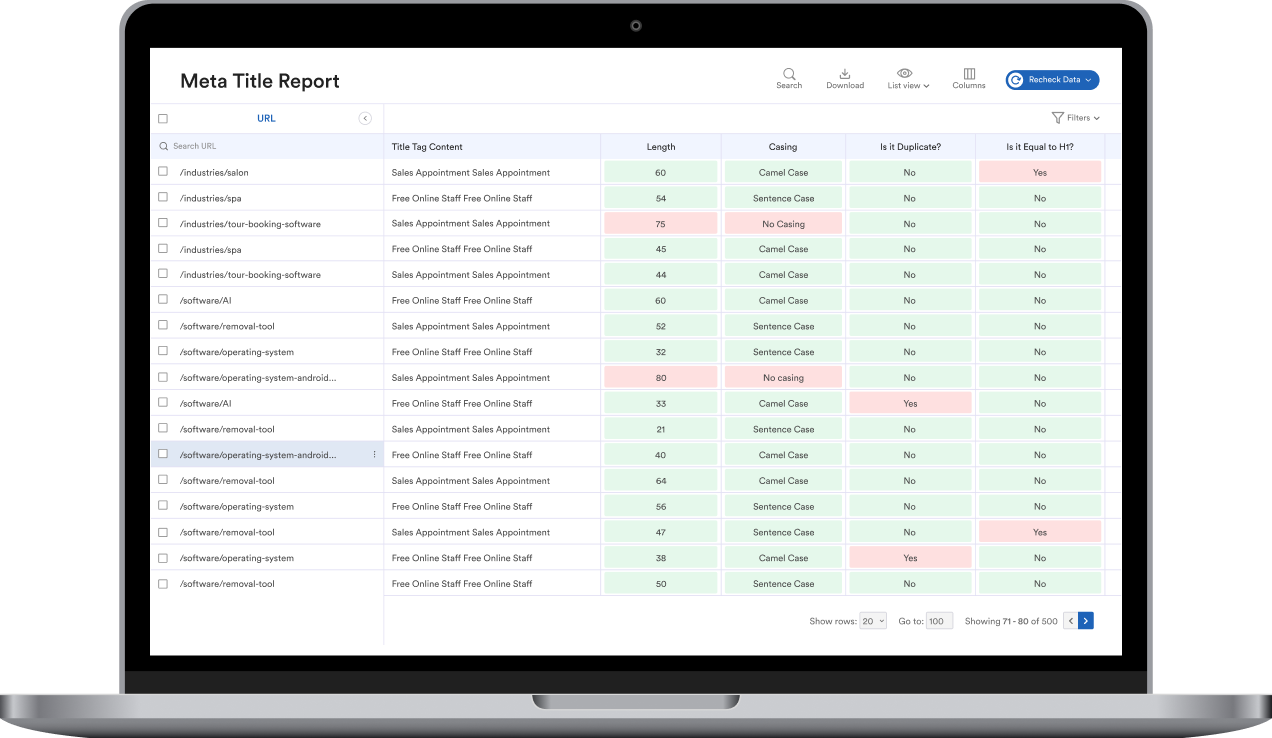
Create detailed reports for SEO, performance, best practices, and security - all from a single dashboard. Share insights, spot issues, and take action fast.
Spot what’s limiting search visibility in minutes. Get structured reports for metadata, indexation, canonicals, headings, status codes, and sitemaps - ready to share.
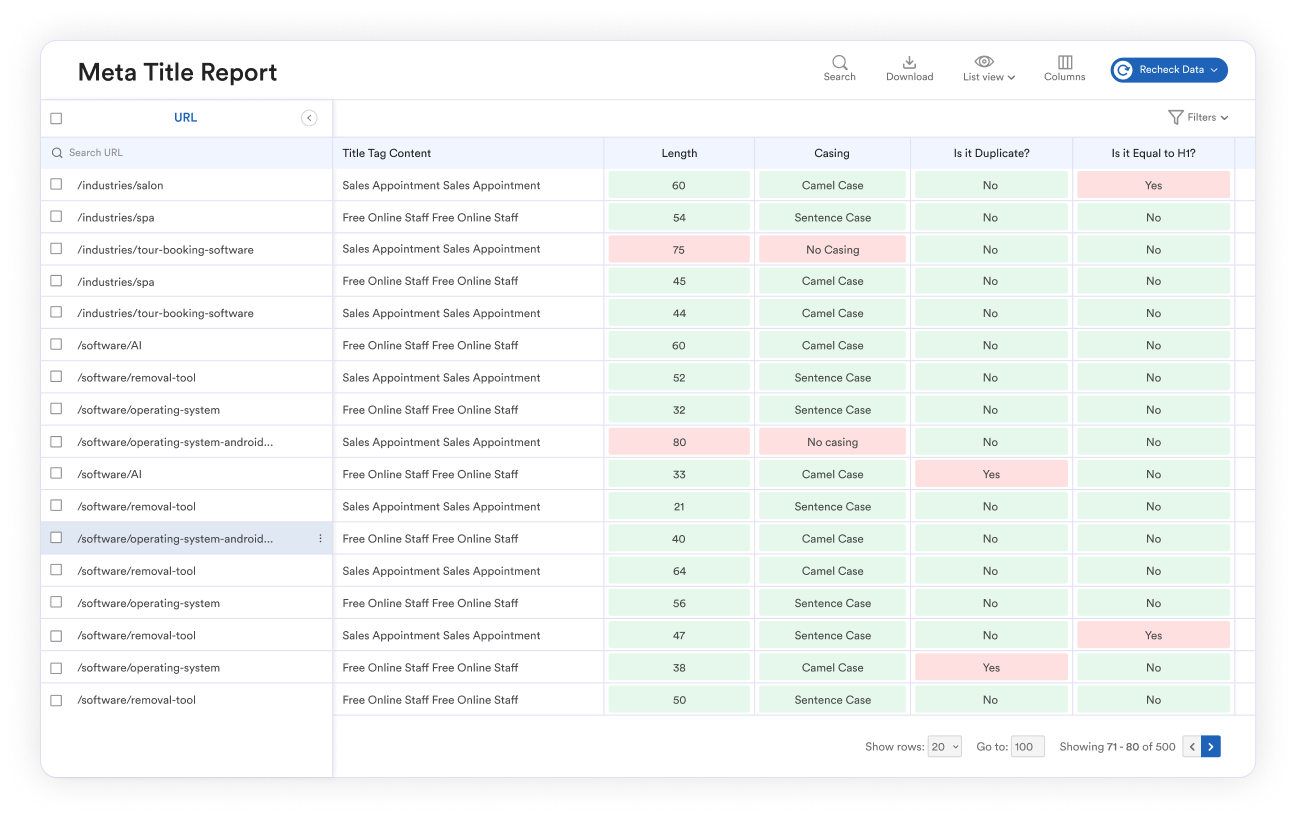
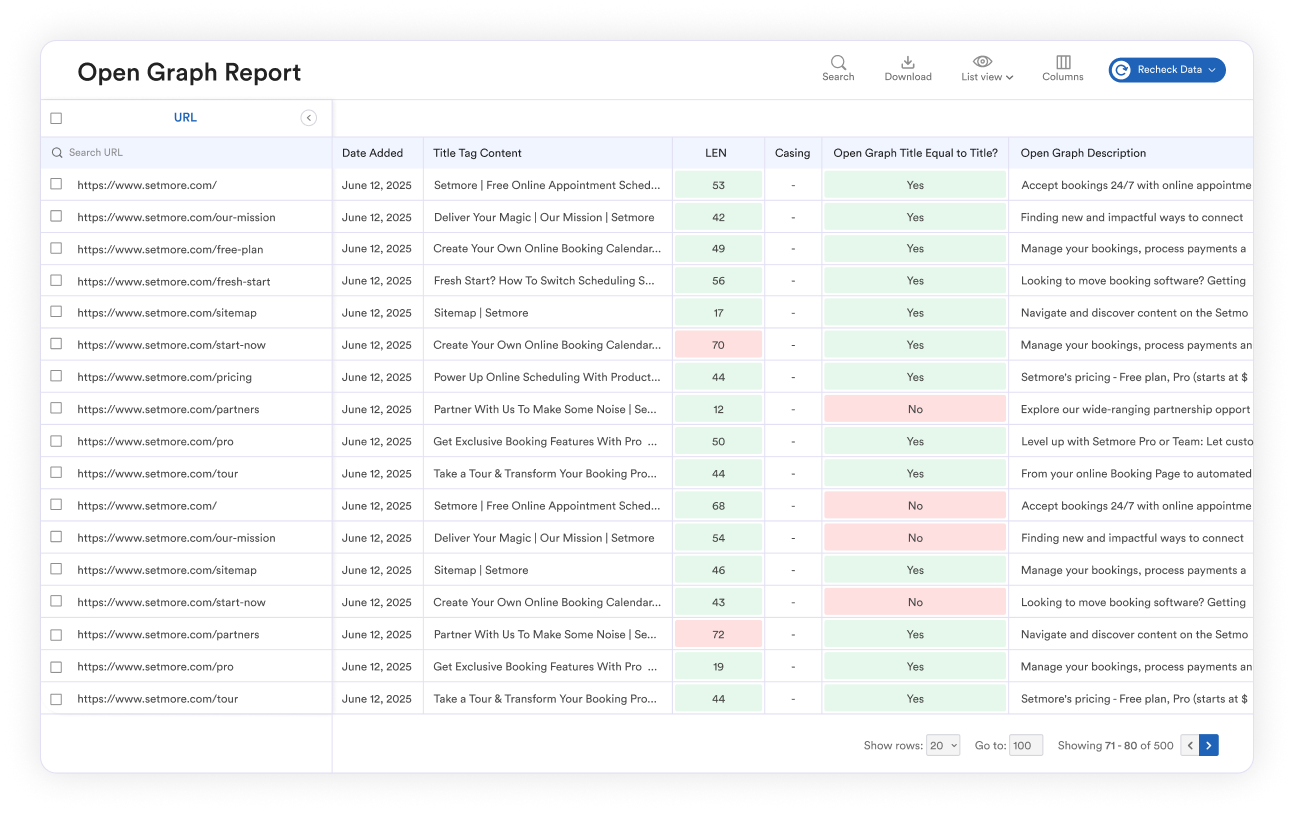
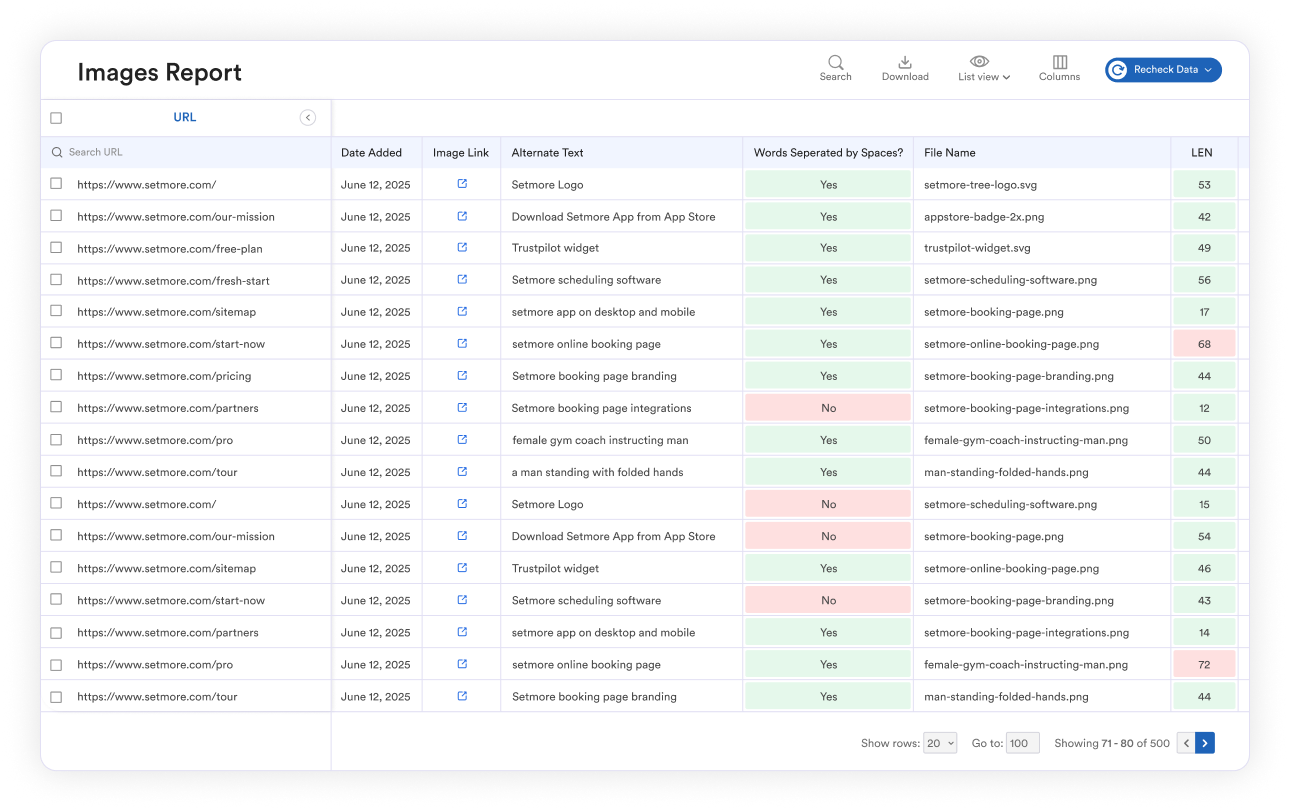
Metadata checks: meta titles, meta descriptions, URL slugs, and missing/duplicate fields
Indexation signals: canonical tags, robots meta directives (index/noindex, follow/nofollow), and crawl guidance.
Technical health: HTTP status codes, redirects, broken pages, and inconsistent URLs.
Structure and coverage: heading hierarchy (H1–H6), XML sitemap availability, and sitemap URL coverage.
Generate performance reports that pinpoint slow pages, heavy assets, and rendering bottlenecks - so you can prioritize fixes that improve user experience and rankings.
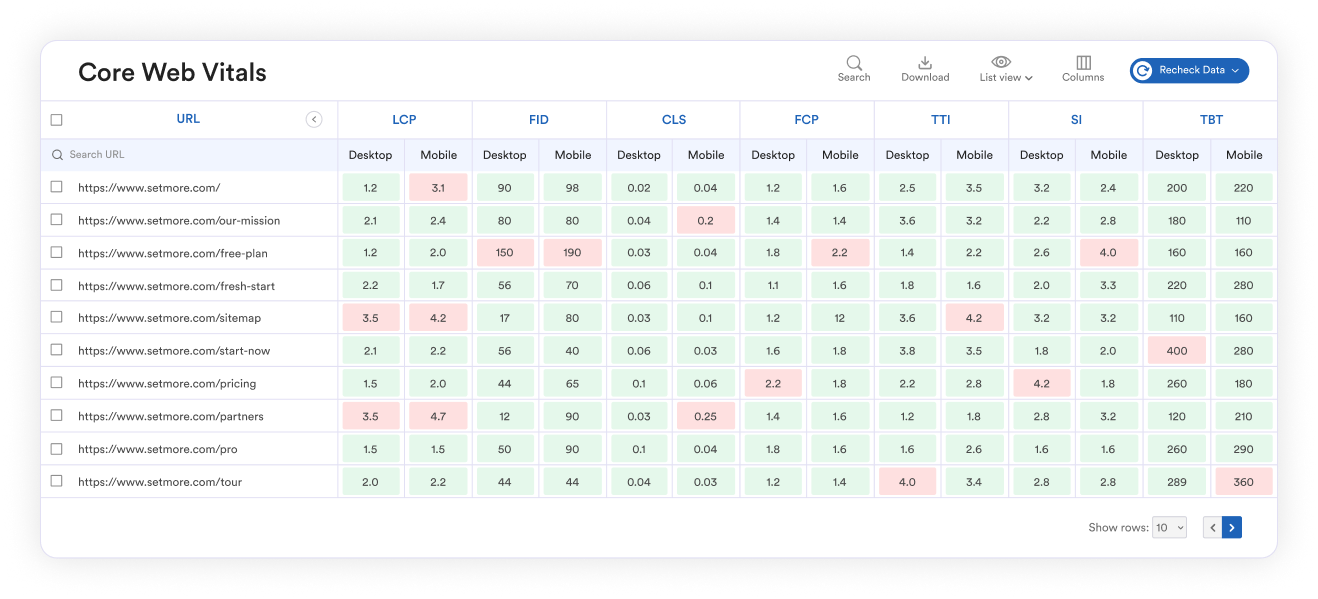
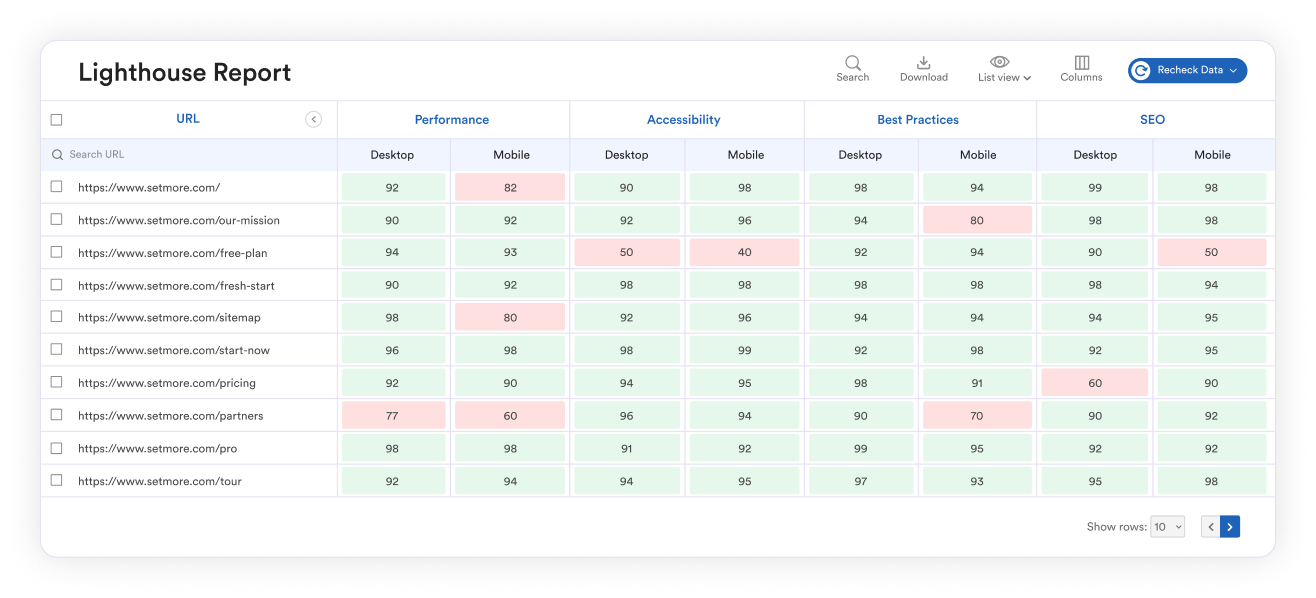
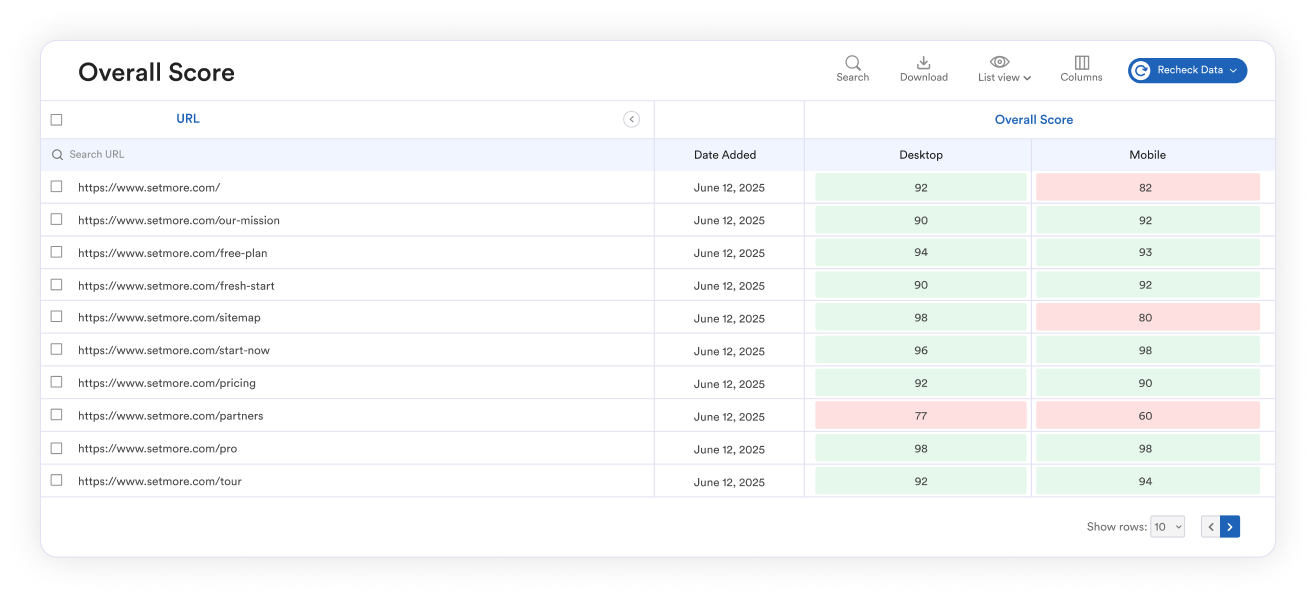
Core Web Vitals: LCP, CLS, INP (and supporting lab metrics) across pages and templates.
Loading & server signals: TTFB, redirects, caching opportunities, and compression gaps.
Asset & page weight: large images, heavy scripts, unused CSS/JS, and third-party impact.
Prioritized fixes: page-level issues grouped by severity, with exports for dev hand-offs.
Generate reports that surface quality and standards issues affecting usability, accessibility, and long-term website health. Identify outdated patterns, structural problems, and risky implementations—organized for fast fixes.
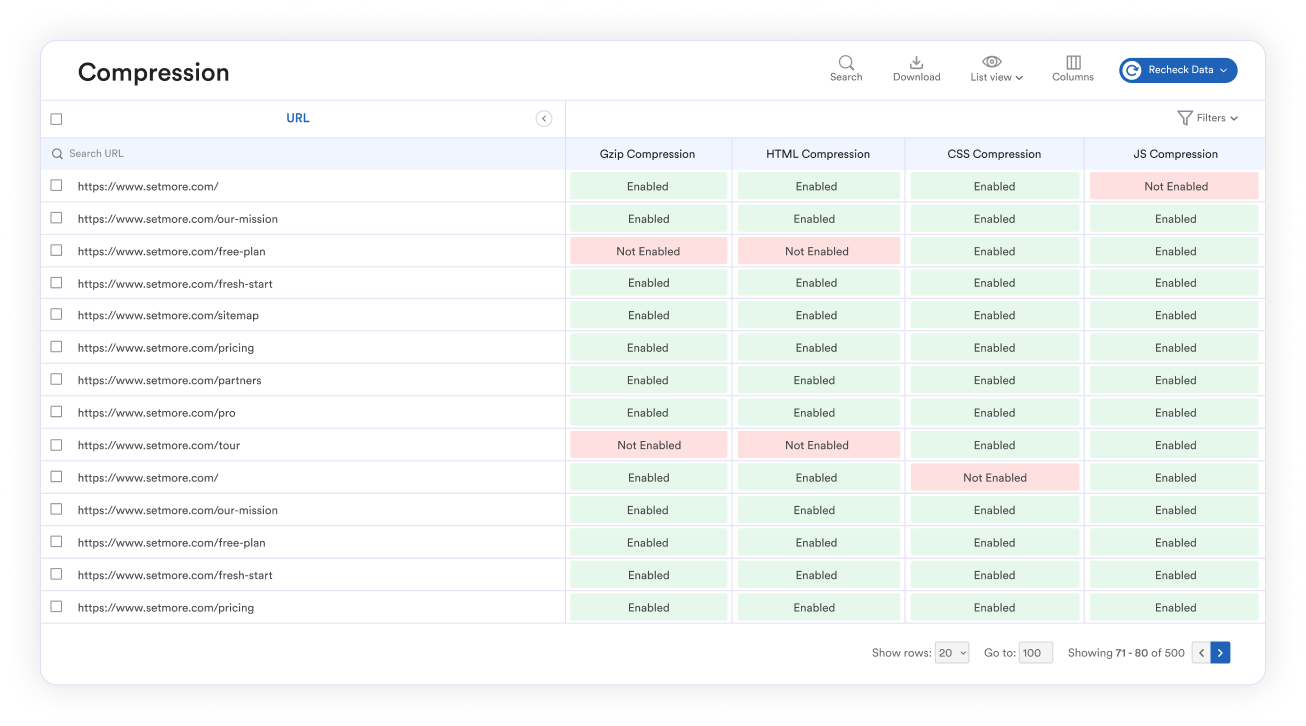
HTML & markup quality: invalid tags, broken structure, duplicate IDs, and deprecated elements.
Accessibility basics: missing alt attributes, improper labels, contrast issues, and semantic gaps.
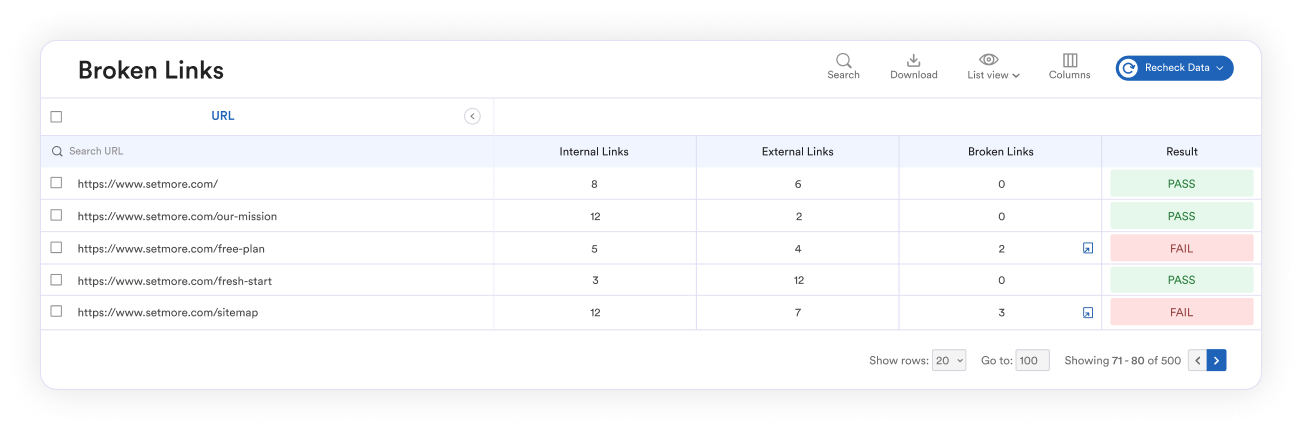
Linking & resource hygiene: broken links, mixed content, insecure resources, and inefficient loading patterns.
Modern web standards: responsive best practices, viewport configuration, and compatibility checks.
Generate clear security reports to uncover vulnerabilities, misconfigurations, and risky exposures. Understand where your site may be at risk and what needs attention - without digging through raw data.
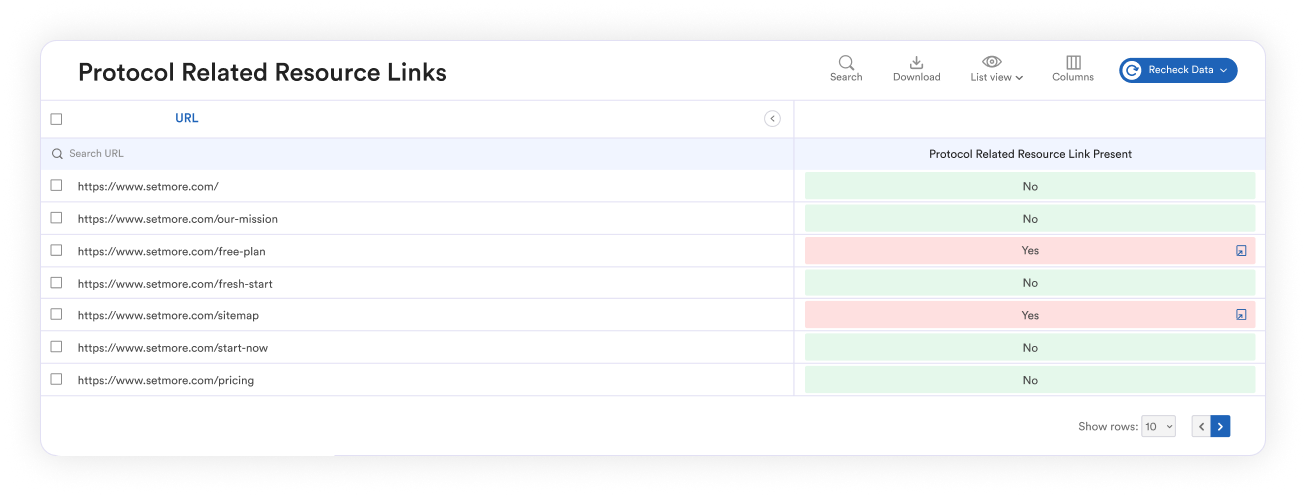
Protocol & encryption checks: HTTPS usage, mixed content, insecure requests, and certificate issues.
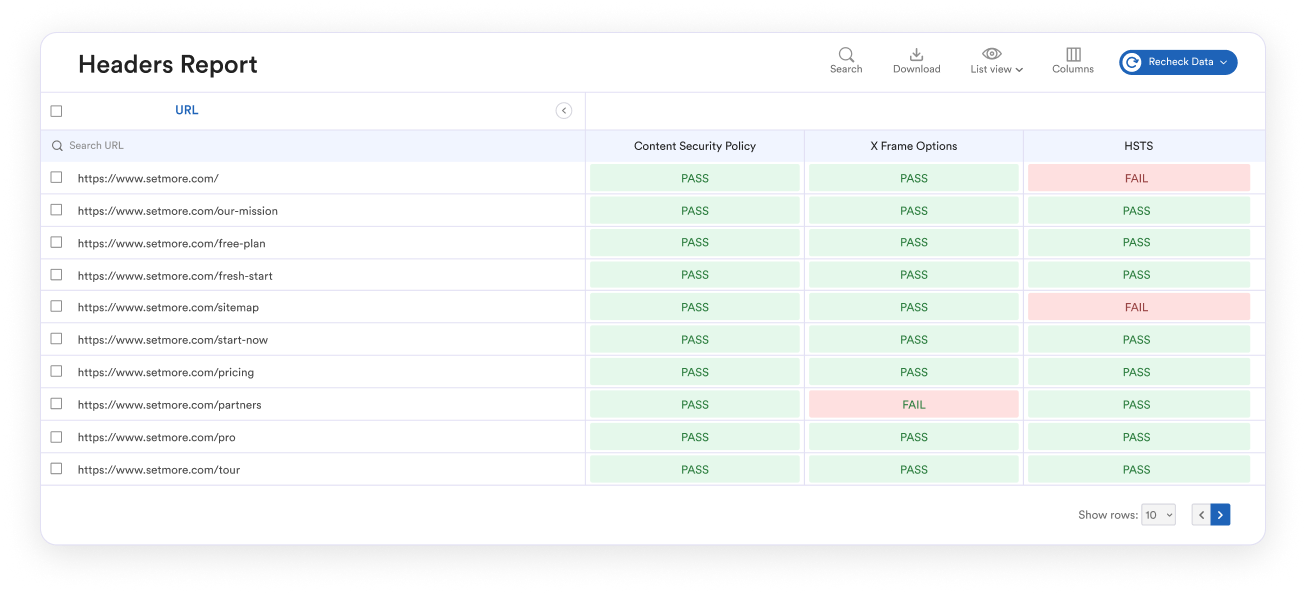
Header & policy validation: security headers, content security policy (CSP), and misconfigurations.
Exposure risks: open directories, unsafe forms, third-party scripts, and sensitive data leaks.
Response & access signals: HTTP status anomalies, error exposure, and access control indicators.
Marketing analysts, web developers, project managers, and website owners all need the same thing: clear answers and fast next steps. WebQA Reports turns audits into structured, shareable findings - so each team can review what matters to them and move work forward without back-and-forth.
Quickly review titles, meta descriptions, canonicals, indexation signals, headings, and sitemap coverage in clear tables. Spot patterns by page type, identify what’s blocking visibility, and export clean data for analysis, content planning, or stakeholder updates.
Give engineers precise, page - level findings across performance, best practices, and security - Core Web Vitals, status codes, redirects, markup issues, mixed content, and more. No guessing, no screenshots - just a clear list of what’s failing and where.
Turn audits into action lists. Reports help you group issues, track what’s most urgent, and assign work across teams with less triage. Share exports or direct report links to keep delivery moving and reduce review cycles.
Understand the health of your site at a glance - what’s working, what needs attention, and what to fix next. Use ready to share reports to align everyone, confirm improvements after changes, and keep quality high as your site grows.

WebQA lets you generate detailed reports across SEO, performance, best practices, and security. This includes metadata checks, indexability signals, Core Web Vitals, code quality issues, accessibility basics, and common security misconfigurations—all organized at the page level.
Yes. All reports can be exported in multiple formats such as PDF, CSV, and XLSX, making it easy to share findings with developers, marketers, stakeholders, or clients without extra cleanup.
No. WebQA reports are designed to be clear and structured, with pass/fail indicators and page-level details. You can quickly understand what’s wrong, why it matters, and where to focus—without digging through raw audit data.
Reports are generated based on the latest crawl or scan of your website. You can run audits on demand or use ongoing tracking to keep reports up to date as your site changes.
Absolutely. WebQA highlights issues by type and severity, helping you identify what to fix first—whether it’s SEO blockers, performance bottlenecks, best-practice violations, or security risks.
Generate SEO, performance, best practices, and security reports in minutes—then share fixes with your team and move faster.
.svg)